
Olympia Services · Insights
Burst Pipe? Here Is Exactly What to Do in the First Hour
Burst pipe? Here is the exact first-hour sequence a 27-year San Diego contractor runs: shut-off valve, kill power, document for insurance, and when to stop and call.
- 4.2 · 27 Google Reviews
- Licensed & Insured
- 24/7 Emergency Response
- Serving El Cajon & SD County
Olympia Services
Inside This Guide
A burst pipe just turned your home into a clock, and what you do in the next hour matters more than what you do the rest of the week. Most guides you will find hand you a list of causes and a shrug. After 27 years running emergency water calls across El Cajon and East County, here is what we actually tell homeowners on the phone before we roll a truck: there is a fixed sequence for the first 60 minutes, and there is a clear point where DIY stops and you need a plumber and extraction crew. Olympia Services is a licensed California contractor (Lic. 1044933), insured, and available 24/7, so read this, run the sequence, then call and we will handle the part you should not.
Burst pipe: what to do right now
Move fast and move in order. A half-inch supply line under pressure can push out several gallons a minute, so every minute the main stays open is more water in your walls and floor. Do not stop to bail or mop first. Stopping the source comes before everything else, and the steps below are the exact order we walk people through while we are en route.
- 1. Shut off the water at the main. This stops the flooding at the source. If you cannot find or turn the main, more on that in the next section.
- 2. Open a low faucet to drain the lines. Open the lowest faucet in the house (often an outdoor hose bib or a basement tap) to bleed pressure and pull standing water out of the pipes away from the break.
- 3. Kill power to the affected area. If water is anywhere near outlets, fixtures, or the panel, cut the breaker to that zone before you step in. Do not stand in water to reach a switch.
- 4. Document before you touch anything. Photograph and video the break, the standing water, and every wet surface and belonging. Timestamped photos are the backbone of your insurance claim.
- 5. Get the obvious water moving out. Towels, a wet vac, moving small items to dry ground. This buys time, but it is not drying the structure, which is the part that decides whether you get mold.
- 6. Call for the repair and extraction. A plumber fixes the line, an extraction crew dries the structure. On a real burst you want both, and you want them today.
That last point is where homeowners lose the most money without realizing it. You can absolutely handle steps one through five yourself. What you cannot do with a shop vac and a box fan is dry the water that has already wicked into the subfloor, the wall cavity, and the framing. That is where emergency water extraction gets standing water out fast, because our truck-mounted equipment pulls water out of materials a household vac never reaches, and it does it before the 24-to-48-hour window when mold starts.
How to shut off the water to your house
Your home has two shut-offs that matter, and you want to know where both are before you ever need them. The interior main is usually a valve where the water line enters the house: in San Diego and East County homes that is often in the garage, in a utility closet, or on an exterior wall near the water heater. Turn it clockwise until it stops. The second is the street-side meter valve, out at the curb in a concrete or plastic box, which you turn with a meter key or a crescent wrench when the interior valve is stuck or missing.
Go find both valves today, while nothing is wrong. Turn the interior main a quarter turn to confirm it actually moves, then open it back up. Tag the meter box so a house-sitter or your teenager could shut it in the dark. The single most common thing we hear on emergency calls is that nobody in the house knew where the shut-off was, and the water ran for 20 extra minutes while they searched.

My house flooded, what do I do?
If water is already standing across your floor, the priority shifts from stopping the source to getting the water out and the structure dry, fast. Standing water does not sit still and wait. It wicks up into drywall, spreads along the subfloor, and soaks into framing within hours, and every hour it sits is more material you have to replace instead of dry. The honest gate is this: if the water is more than a thin surface film, or it has reached carpet, walls, or cabinets, you are past what a mop and fans will fix.
| You can handle it | Stop and call us |
|---|---|
| A pinhole drip you caught early, water on a hard floor only | Water has reached carpet, drywall, or cabinets |
| You found and closed the shut-off, flow has stopped | The valve will not close and the water keeps running |
| A visible fitting you can see and reach | The burst is behind a wall, under the slab, or in the ceiling |
| Surface water you wiped up within minutes | Water has been standing more than a couple of hours |
| Everything is dry and you just want a plumber for the repair | You smell must, or the ceiling below is sagging or stained |
When you are on the right-hand side of that table, our crew handles the full arc: our plumbers repair the burst line and pressure-test the system so it does not fail again, and the extraction and drying crew maps the moisture, sets air movers and dehumidifiers, and monitors it until the framing reads dry. And when the break is hidden, water showing up two rooms away from where the pipe actually failed, we run leak detection to find the burst behind the wall instead of opening up drywall on a guess.
Burst pipe questions we get most
Two questions come up on almost every call, both about cost and coverage. Here are the straight answers.
How much does it cost to fix a burst pipe?
The pipe repair itself is usually the smaller number. An accessible burst fitting is a modest repair; one behind a wall or under the slab costs more because of the access work. The bigger variable is the water damage: how far it spread and how long it sat. That is exactly why the first-hour sequence matters, because fast extraction is what keeps the drying and rebuild bill from dwarfing the plumbing. We give you a flat quote before we start, so you know the number up front.
Does homeowners insurance cover burst pipes?
Usually yes. A sudden, accidental burst is the textbook "sudden and accidental" discharge a standard homeowners policy is built to cover, unlike a slow leak that dripped for months. What protects the claim is documenting the burst before you clean up and starting mitigation right away, since most policies require you to prevent further damage. We cover the full breakdown in our guide on whether insurance covers water damage. This is general guidance, not a coverage ruling on your policy.
Pipe burst? Get it stopped and dried today.
We have run emergency burst-pipe and water calls across El Cajon and San Diego County for over 27 years. Licensed California contractor (Lic. 1044933), insured, and available 24/7.
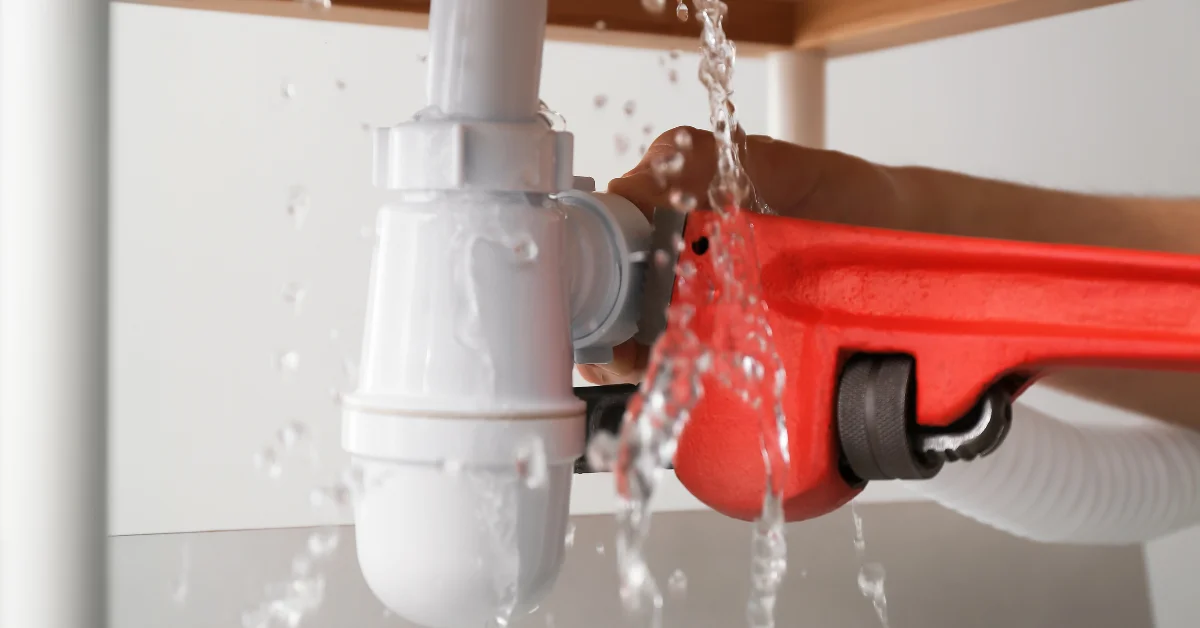
24/7 Emergency Service
Restoration & plumbing you can count on, any hour of the day.
Over 27 years serving El Cajon and San Diego County. Licensed, insured, and ready when you call.